



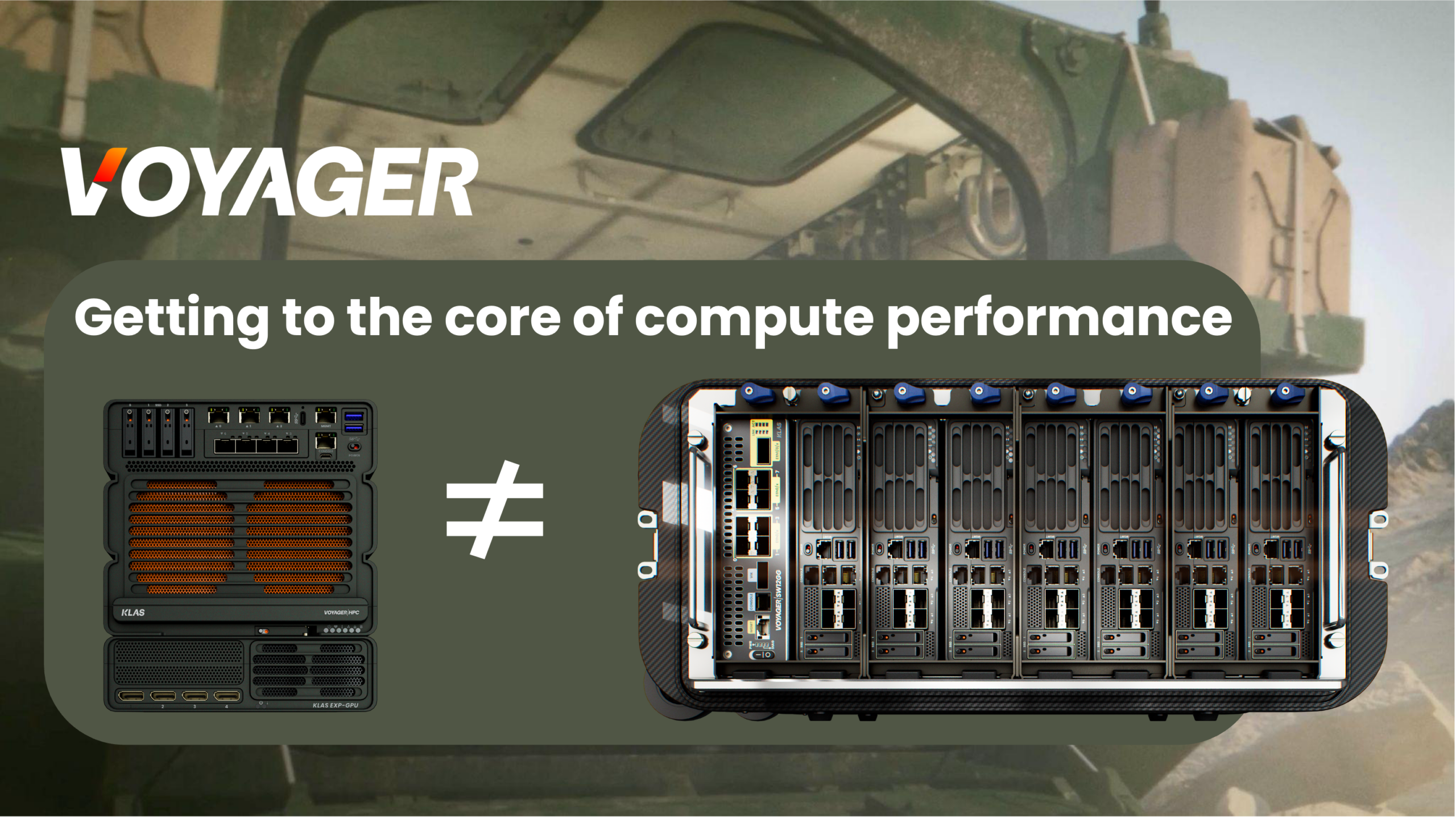
Highlighted in the figure below is a typical, but wrong way of comparing VoyagerHPC (128 thread processor) and multiples of VoyagerVM 4.0 (20 thread processor). VoyagerHPC is a low-SWaP single node rugged high-performance computing (HPC) module intended for low latency C5ISR decision making as part of AI enabled services at the tactical edge.
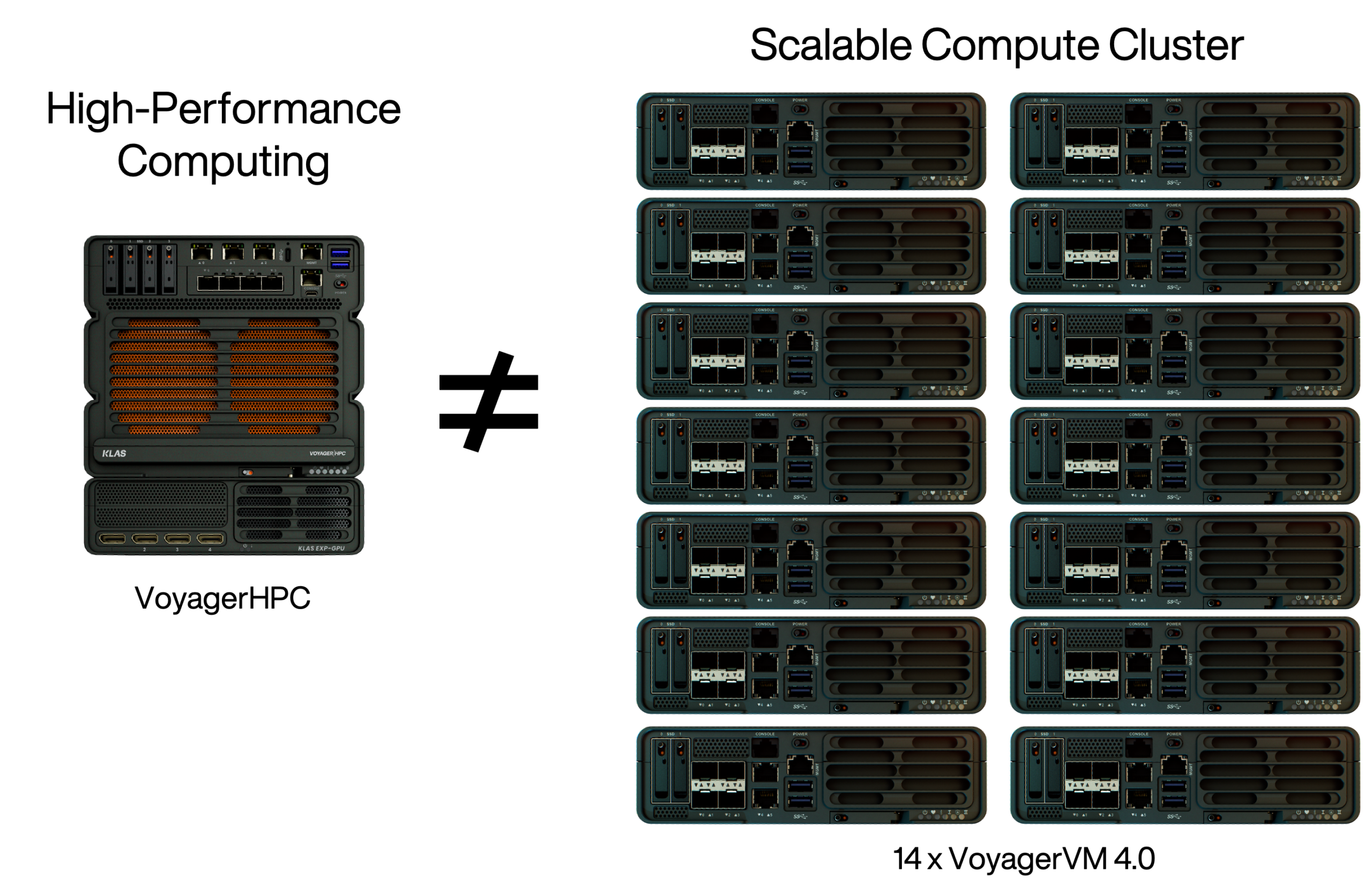
Whereas the VoyagerVM 4.0, is a lower performing rugged server. However, when multiple modules are interconnected it creates a compute cluster. Technically, up to 14 modules can deliver the equivalent (slightly more) compute performance of a single VoyagerHPC node. However, compute clusters are intended for a completely different use case. As an example, a VoyagerVM 4.0 compute cluster can serve Terabits of high-speed data to tens or hundreds of users in the TOC.
Often the terms of HPC and compute clustering are intermingled, creating uncertainty, doubt and misinformed purchasing decision making. In this blog, we discuss the difference and merits of both types of compute deployment.
Comparing Apples to Oranges
VoyagerHPC and VoyagerVM 4.0 fall under the category of rugged edge servers. With both servers’ sharing the commonality of industrial grade multi-stream processors. However, that’s where the comparison stops.
Delving into the two servers, we see that –
- VoyagerHPC is a rugged high-performance computing server, with an AMD 64 core / 128 thread processor, and up to 1TB of RAM
- VoyagerVM 4.0 is a rugged low-SWaP server, with an Intel 10 core / 20 thread processor, and up to 128GB of RAM, running on as little as 110 watts of power.
Evidently, VoyagerHPC as a single node deployment offers far more compute capability than the VoyagerVM 4.0.
Where group theory goes wrong
Taking the normal core count of each server, the most obvious thing to say is that you need 6-7 x VoyagerVM 4.0 to match the performance of the VoyagerHPC. Which is completely the wrong thing to do.
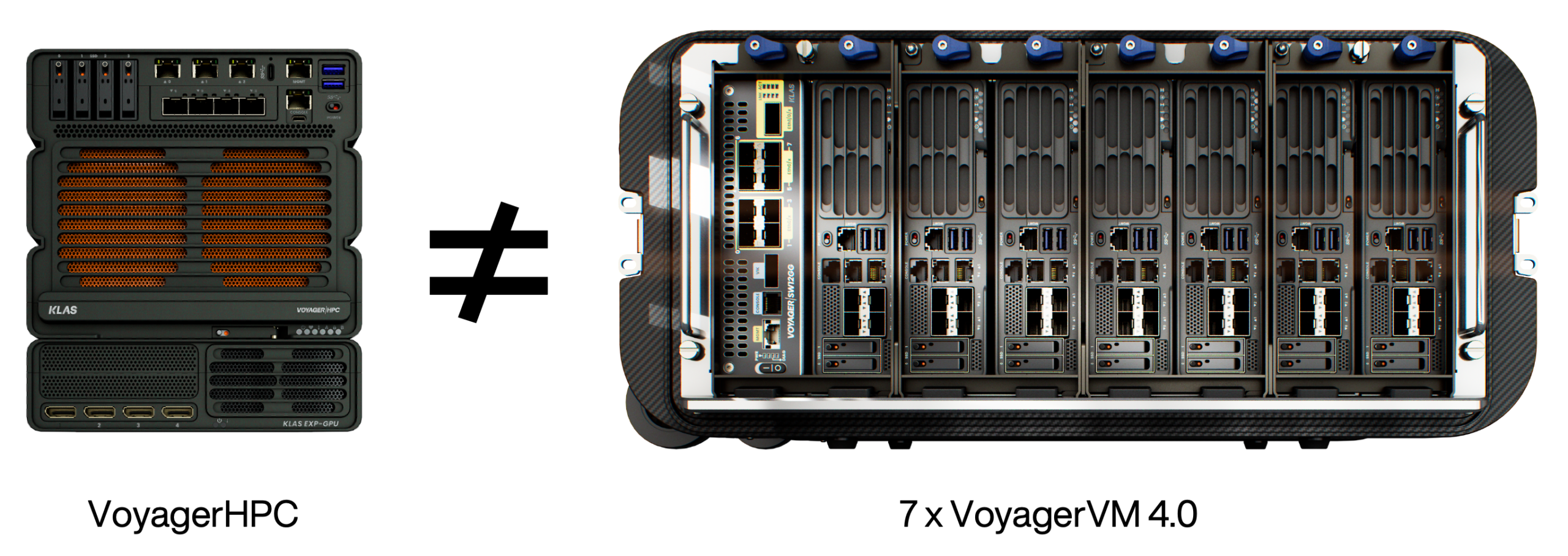
From a previous blog on VoyagerVM 4.0 performance, we discussed Giga-Floating Point Operations per second (G-FLOPS). Comparing the total available G-FLOPS, we see that –
• VoyagerHPC = 3,763
• 7 x VoyagerVM 4.0 = 1,904
Theoretically, you would need approximately 14 x VoyagerVM 4.0 to deliver the equivalent performance of the VoyagerHPC (as correctly identified by our competition).
HPC versus Compute Clustering
Equally, it is a mistake to compare the performance of the VoyagerHPC to a scaled VoyagerVM 4.0 compute cluster (as our competitors have done). For example, the VoyagerHPC is intended to run compute intensive C5ISR applications, such as video processing, geospatial mapping with AI/ML routines, all as a single compute node at the tactical edge.
A scaled VoyagerVM 4.0 compute cluster i.e. many compute nodes interconnected, is intended for high-availability services serving hundreds of users, from big data analytics to parallel processing of virtual desktops with email and voice over IP networks.
With 14 x VoyagerVM 4.0 it’s possible to push up to 1.47 Terabits of data per second versus VoyagerHPC’s lower networking throughput of 105 Gigabits per second (versus the competition’s HPC with 20Gbps).
In Summary
VoyagerHPC and VoyagerVM 4.0, while both are rugged compute servers, they are intended for different purposes at the tactical edge. VoyagerHPC is intended for compute-intensive C5ISR applications in confined spaces and/or power constrained environments. Whereas, the VoyagerVM 4.0 is designed for less compute intensive workloads e.g. sensor data collection and processing at the tactical edge.
However, VoyagerVM 4.0 enables the flexibility to create a compute cluster serving Terabits per second of data. Furthermore, VoyagerVM 4.0 is key to facilitating a flexible and configurable hyperconverged infrastructure for resilient modern day Battalion operations at any scale.
[Click to see the full range of Voyager rugged compute platforms.]